Enter your email to watch


How to Grow Faster With Multichannel Ecommerce
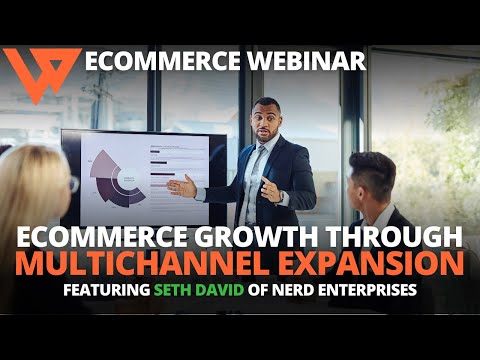
Growing an ecommerce business takes more than launching products on new marketplaces. This webinar explores how merchants can expand across Shopify, Amazon, Walmart, TikTok Shop, POS systems, and other sales channels while maintaining operational efficiency. Learn how to choose the right channels, understand your audience, leverage AI, automate ecommerce accounting, and build a scalable multichannel business.
- Understand the difference between multichannel and omnichannel commerce.
- Learn how to choose the right sales channels based on your products and audience.
- Discover how AI can help identify customer personas and marketing opportunities.
- Learn how Shopify, Amazon, Walmart, TikTok Shop, POS systems, and marketplaces fit different business models.
- Understand why every ecommerce business should own its storefront before expanding to marketplaces.
- Learn best practices for scaling inventory, product catalogs, and operations.
- Discover how Ecommerce Accounting Automation simplifies multichannel bookkeeping.
- Understand why integrating sales channels with QuickBooks improves financial visibility.
- Learn how analytics and reporting help merchants decide when to expand or pivot.
- See how automation reduces manual work while preparing businesses for long-term growth.
Ecommerce Growth Through Multichannel Expansion: How to Scale Without Creating More Chaos
Growing an ecommerce business is no longer about succeeding on a single platform. Today's fastest-growing merchants build a multichannel ecommerce strategy that allows them to reach customers wherever they shop while maintaining operational efficiency. This webinar explores how businesses can expand across multiple sales channels without creating accounting headaches or operational bottlenecks.
The first step is understanding the difference between multichannel and omnichannel commerce. Multichannel ecommerce simply means selling on more than one platform, such as Shopify, Amazon, Walmart, eBay, or TikTok Shop. Omnichannel commerce goes a step further by connecting every part of the business, including accounting, inventory, customer communication, fulfillment, and marketing, into one streamlined system.
Choosing the right sales channels begins with understanding your audience. Every marketplace attracts different shoppers, and each platform serves different product categories and demographics. Before expanding, merchants should analyze website analytics, customer behavior, market trends, and competitor activity. The webinar also highlights how AI tools can accelerate customer research by creating detailed buyer personas, identifying marketing opportunities, and recommending the best channels for growth.
Another important takeaway is that not every business should launch everywhere at once. Expanding gradually allows merchants to test demand, refine product listings, and optimize operations before adding additional marketplaces. Building a repeatable process for product data, SKU organization, documentation, and inventory management makes future expansion significantly easier.
As businesses grow, accounting becomes increasingly complex. Orders, refunds, shipping fees, taxes, and payouts begin flowing from multiple platforms, making manual bookkeeping difficult and error-prone. This is where Ecommerce Accounting Automation becomes essential. Integrating Shopify, Amazon, Walmart, and other marketplaces with QuickBooks helps merchants automatically sync financial data, reduce manual entry, and improve reporting accuracy. Solutions that support Shopify QuickBooks Integration and Amazon QuickBooks Integration allow businesses to maintain cleaner books while scaling confidently.
The webinar also emphasizes the importance of diversification. Depending too heavily on one marketplace creates unnecessary risk. Changes in algorithms, policies, or consumer behavior can quickly impact sales. Maintaining multiple distribution channels while continuously reviewing analytics allows businesses to adapt more quickly and identify new opportunities before competitors.
Finally, technology plays a major role in sustainable growth. Project management systems, AI assistants, centralized documentation, and ecommerce accounting software help businesses stay organized while expanding across new channels. Combined with regular performance reporting and Order-level Reconciliation, these systems provide greater financial confidence and enable smarter business decisions.
Successful multichannel ecommerce is not about selling everywhere. It is about choosing the right channels, building repeatable processes, and creating a connected technology stack that supports long-term growth. With the right strategy and automation in place, businesses can expand confidently while keeping operations efficient and their financial data accurate.
What is multichannel ecommerce?
Multichannel ecommerce is the practice of selling products across multiple sales channels such as Shopify, Amazon, Walmart, eBay, TikTok Shop, and physical retail locations.
What is the difference between multichannel and omnichannel commerce?
Multichannel focuses on selling through multiple channels. Omnichannel connects those channels along with inventory, accounting, customer service, and marketing into one unified business system.
How do I choose the best ecommerce sales channels?
Why is ecommerce accounting important for multichannel sellers?
Selling across multiple platforms generates more transactions, payouts, refunds, and fees. Ecommerce Accounting Automation helps keep financial records accurate while reducing manual bookkeeping.
How does Webgility help multichannel ecommerce businesses?
Webgility automates QuickBooks Ecommerce Accounting by syncing orders, inventory, taxes, payouts, and fees from multiple ecommerce channels into QuickBooks, giving businesses cleaner books and better financial visibility.
Watch More

Find out what your operational gaps are actually costing you.
Our team of experts will help surface your operations and finance concerns. In 30 minutes, we will discuss your channels, accounting setup, leakages, inventory inconsistencies, and close process.