

Key Takeaways:
|
Beauty tariffs are back in focus, and they’re already reshaping how beauty brands price, source, and sell.
In 2025, US beauty tariffs surged nearly tenfold, jumping from an average of 2.4% to roughly 30%, fundamentally altering the cost structure of selling beauty products online. With tariffs as high as 145% on Chinese imports and a 10% baseline on goods from other countries, the pressure is mounting fast.
This matters even more when imports account for nearly two-thirds of total beauty product costs.
No matter if you’re selling on a single channel or doing multichannel (managing inventory across Shopify, Amazon, and retail), these tariffs affect everything from ingredient sourcing to packaging to your landed cost calculations.
This guide breaks down where beauty tariffs hit hardest, which categories face the most exposure, and how to adjust your operations without panic.
The hidden costs of beauty tariffs for ecommerce sellers
For ecommerce sellers, the real impact of beauty tariffs goes far beyond import duties and shows up across every layer of the cost structure:
1. What beauty tariffs really add to your costs
Start with direct tariff math. A $10 wholesale lipstick with Chinese-sourced components now lands at roughly $13 before you factor in shipping, storage, or marketplace fees. Scale that across hundreds of SKUs, and the margin erosion becomes significant.
Packaging materials amplify the problem. Aluminum is used in premium tubes, caps, aerosol cans, and spray components; already costing 3-6x more than plastic alternatives, which is why you see it in more premium products. With aluminum tariffs now at 50%, that premium just widened further.
Raw materials and ingredients face similar pressure. Actives, preservatives, and fragrances sourced internationally all carry added costs. Glass and specialty plastics used in skincare packaging aren't immune either. If you're working with private-label or contract manufacturers, their exposure becomes your exposure.
2. How tariffs disrupt your supply chain
When tariffs change, it’s never just one impact; it’s a ripple effect felt across your entire supply chain.
Lead times are stretching. Some logistics providers are already seeing longer lead times and more fragmented shipments for companies that are diversifying suppliers. For ecommerce sellers managing inventory across multiple channels, longer lead times mean higher carrying costs and increased stockout risk.
Warehousing is another hidden pressure point. Some brands are stockpiling inventory ahead of tariff hikes, driving up storage costs, especially painful for smaller ecommerce sellers without long-term warehouse contracts.
Simultaneously, suppliers are raising minimum order quantities to offset their own rising costs, pushing brands to buy more inventory upfront or risk losing preferred pricing.
3. The margin squeeze: When higher costs start eating into margins?
At the end of the day, the pressure lands on margins. Mass brands usually try to absorb the hit to keep prices steady, while premium brands may raise prices selectively. Still, manufacturers are already planning for a 5–10% increase in packaging cost through late 2025 and early 2026, which means consumers will likely feel it soon after.
| A quick fact: Tariffs don’t just raise costs; they introduce volatility that makes pricing and margin planning harder month over month. |
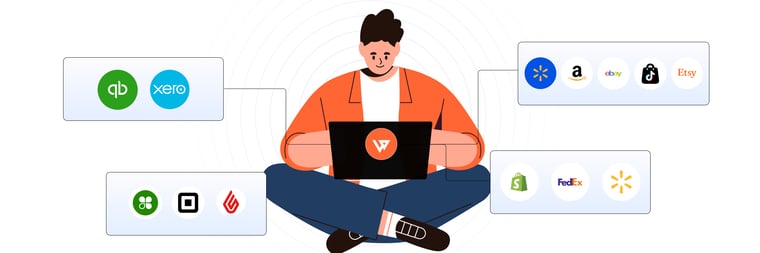
Without clear visibility into true landed costs, beauty tariffs turn everyday pricing decisions into ongoing operational headaches. This is where a platform like Webgility helps by delivering accurate, order-level financial data across every channel. When fees, duties, and settlements are automatically captured, teams can protect margins with confidence, even as volatility increases.
The accounting & SKU nightmare
In 2026, the biggest threat to your beauty brand isn't just the tax itself, it’s the spreadsheet that can no longer keep up with it. For multichannel beauty sellers, the operational complexity may ultimately cost more than the duties themselves and turn SKU-level profitability into a moving target.
Here’s how beauty tariffs create accounting chaos:
1. The same SKU never costs the same twice
- The same SKU can have wildly different costs per shipment depending on:
➤ When your supplier ordered raw materials (pre- or post-tariff announcement)
➤ Which country sourced each component (China at 145% vs. Vietnam at 10%)
➤ Whether tariff rates shifted mid-quarter due to trade negotiations - A single lipstick might contain pigments from one country, packaging from another, and assembly in a third; each with different duty implications.
- Lots of items advertised to consumers are made in the US, but the materials and packaging are actually made abroad.
- That domestic serum might still carry tariff exposure on its glass dropper from China, aluminum cap from overseas, or active ingredients sourced internationally.
- Your accounting system probably wasn't built to track costs that change shape every shipment.
2. It’s hard to tell which products yield profits
- Historical cost data: The foundation of pricing and inventory decisions suddenly becomes unreliable
- That $24.99 vitamin C serum showing 42% margins last quarter? It might be underwater now if the latest batch included tariffed packaging components
- You won't know actual profitability until reconciliation, weeks or months after you've already reordered and repriced
- With dozens or hundreds of SKUs containing multiple components from various origins, manual cost tracking breaks down entirely
| What most sellers have: Quarterly estimates based on assumptions that may no longer hold |
| What you need: Real-time visibility into true landed costs per unit, updated as shipments arrive |
3. Multichannel selling multiplies the chaos
- Each channel has different economics that shift when landed costs change:
➤ Amazon: referral fees + FBA costs
➤ Shopify: payment processing + app fees
➤ TikTok Shop: commission structure
➤ Wholesale: margin expectations + payment terms - Layer in additional variables, creating a formula for errors:
➤ Sales tax obligations varying by state and platform
➤ Shipping costs fluctuating with carrier surcharges
➤ Tariff rates that change between ordering and arrival - Manual spreadsheets can't keep pace; by the time you update cost formulas for one shipment, the next arrives with different duty calculations
- Pricing and promotion decisions get made on margin assumptions that may already be obsolete
4. Switching suppliers costs more than you think
- The cost to switch suppliers is very high. Think thousands of dollars per product/SKU for all of the testing that has to be redone
- Many small companies don't have the extra time or resources (human or capital) to execute a secondary qualification program just to offset tariffs
- Beauty-specific switching costs include:
➤ Stability testing for new packaging or components
➤ Compatibility assessments for reformulated products
➤ Updated regulatory filings and safety documentation - Timeline to see tariff relief from a supplier switch: 18-36 months
| The reality check: The sellers may stay locked into higher-cost suppliers longer than they’d like, simply because the switching cost is too steep. |
5. Delayed reporting leads to costly mistakes
- Monthly reconciliation is already a stretch in today’s tariff environment. Quarterly reconciliation is still the norm for many sellers, almost guaranteeing reporting lag when costs are changing in real time
- By the time you fully reconcile Q4 and understand which SKUs actually performed, Q1 is half over
- Decisions already made on outdated data:
➤ Inventory orders placed based on obsolete margin assumptions
➤ Promotional calendars set for products no longer profitable at discounted prices
➤ Marketing spend committed to SKUs quietly bleeding money - Inventory purchased as an asset becomes a liability when true costs emerge weeks later
- Capital gets locked into products that no longer make financial sense to sell
| How can you win: In tariff-volatile categories, the winners aren't just those with the lowest duty exposure; they're the ones whose financial infrastructure delivers clarity fast enough to actually act on it – often by automatically connecting order, fee, and cost data across every channel, as platforms like Webgility are designed to do. |
| The bottom line: In a volatile tariff environment, beauty sellers need automated systems that track landed costs, calculate true profitability per SKU, and sync everything to accounting software in real-time, not next month. |
Top 5 beauty categories worth selling amid the tariff storm
Not all beauty categories feel the impact of tariffs the same way. While some segments are highly price-sensitive and margin-fragile, others are proving comparatively resilient. Here's where smart sellers are doubling down:
1. Essential personal care products
Products like shampoo, body wash, deodorant, and toothpaste benefit from one powerful advantage: inelastic demand. Consumers may trade down brands, but they don’t stop buying the basics. That makes this category far less vulnerable to sudden pullbacks than color cosmetics or trend-driven beauty.
When the COVID-19 pandemic spread in the second quarter of 2020, sales of beauty and personal care products stayed flat, while cosmetics, clothing, and jewelry fell 7%, 16%, and 19%, respectively. That pattern repeats across economic downturns.
| 💡Pro tip: Focus on multi-packs and subscription models that lock in repeat purchases. Consumers may trade down on discretionary items, but they won't stop washing their hair. |
2. Made-in-USA beauty brands
Domestically manufactured products sidestep most tariff exposure entirely. Brands controlling finished goods manufacturing within the U.S. have a real advantage compared to other brands in a tariff-heavy world.
There’s also a growing consumer pull toward “Made in America.” According to Centric Software, 72% of consumers seek out USA-made goods, and nearly half would spend 10-20% more on products made in the U.S. That's a compelling positioning opportunity.
| The challenge: Limited selection and often higher base costs. Only about 7% of beauty products sold in the US are made domestically. |
| Your strategy: For sellers willing to set themselves apart, pairing tariff protection with locally sourced or domestic manufacturing messaging can create real differentiation. |
3. Sustainable and refillable beauty
Despite inflation and tariff pressure, consumer demand for sustainability hasn’t faded. Beauty shoppers, in particular, continue to reward brands that can prove environmental responsibility.
Refillable systems offer a structural advantage here. By reducing per-unit packaging over time, brands can limit exposure to aluminum and other tariff-sensitive materials. Less packaging also means lower shipping weight and improved long-term margins.
| Example: Brands like Kjaer Weis and Izzy Zero Waste show how refill models can support premium pricing while aligning with sustainability expectations. The initial purchase may be premium-priced, but refills reduce per-unit costs over time; a story that resonates with value-conscious consumers. |
4. High-performance serums
Serums are the ultimate ‘efficient’ product for ecommerce. Why? Yes, because of their high price-to-weight ratio, making them cheaper to ship relative to revenue, and their premium positioning leaves more room to absorb tariff shocks.
| Reality check: You can ship a $90 anti-aging serum for the same cost as a $15 body lotion. |
The facial serum market continues expanding at a 6.5% CAGR, with anti-aging serums commanding the largest segment. For multichannel sellers, serums combine strong consumer demand with economics that survive tariff pressure better than bulkier, lower-margin products.
| Actionable step: Prioritize serums with concentrated formulations and domestic manufacturing where possible; the combination minimizes both ingredient and packaging tariff exposure. |
5. Dermatologist-backed sunscreen
Sunscreen has evolved into a year-round essential, not a seasonal add-on. Dermatologist-recommended, eco-safe, and convenient application formats command premium positioning, and the global sunscreen market is projected to reach $17.2 billion by 2030.
This category benefits from strong brand loyalty, as consumers who find a sunscreen that works for their skin rarely switch. That loyalty translates to pricing stability when costs rise.
| For sellers: Daily-use sunscreen offers predictable demand patterns, and consumers are less likely to trade down or delay purchases, exactly the profile you want in uncertain times. |
Final thoughts: Future-proof your finances!
Beauty tariffs aren’t a temporary disruption. With trade negotiations likely to continue through 2026, volatility is now part of the operating environment, making it essential for your accounting software to be just as agile as your marketing and operations.
Winning brands aren’t just managing tariffs; they’re tracking true profitability in near real time and adjusting pricing, promotions, and inventory before margin pressure shows up on the P&L.
This is where solutions like Webgility fit naturally into the modern beauty stack. By automatically syncing orders, fees, taxes, and costs from your ecommerce and marketplace channels directly into your accounting software, it ensures tariff-driven changes are captured at the transactional level, not guessed at weeks later. That means cleaner books, fewer manual adjustments, and far more confidence in the numbers you’re using to make decisions.
Brands that combine smart category selection with disciplined financial controls are still finding ways to grow. Be one of them!

-3-2.webp?width=760&name=2%20(1)-3-2.webp)
-2.webp?width=760&name=1%20(2)-2.webp)