.png?width=96&name=image%20(2).png)
|
Key Takeaways
|
Nearly 80% of fashion executives flagged port delays as a significant challenge even before the Red Sea crisis hit. Since then, it's only gotten harder, BoF/McKinsey projects apparel manufacturing margins will shrink 10 percentage points by 2030, and tariffs alone are expected to push sourcing costs up 35% in 2026.
In fashion, timing matters. A delay of even one week can turn a fast-selling product into inventory that needs to be discounted.
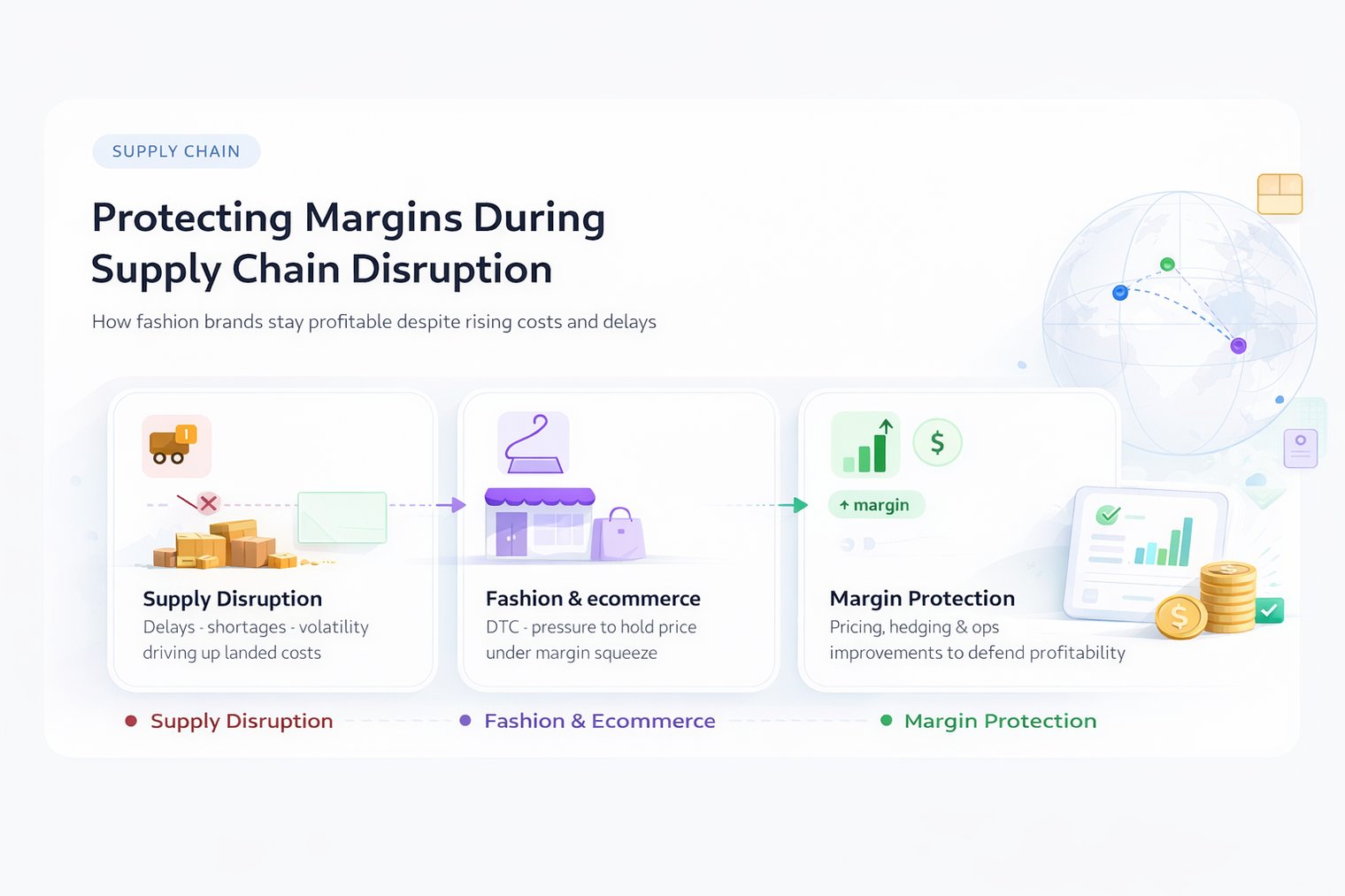
In fashion, even a short delay can force markdowns. Many brands react too late, after freight, fuel, and delivery costs rise, inventory starts piling up, or Amazon adds another 3% to seller-related costs. The real challenge is not avoiding every disruption, but protecting margins through better sourcing, pricing, inventory planning, and financial visibility.
That is why the real question is not only how to prevent supply chain disruption. Some disruption is unavoidable. The bigger challenge is how to protect your margins when it happens.
Why supply chain disruption hits fashion margins so hard
Fashion brands operate in one of the most margin-sensitive environments. With short product lifecycles and seasonal demand cycles, even minor disruptions can have outsized financial consequences.
When shipments are delayed, products miss their peak selling window. At the same time, rising freight, sourcing, and fulfillment costs quietly eat into per-order profitability.
The result is a double hit:
- Overstock forces markdowns and erodes margins
- Stockouts on high-demand items lead to missed revenue
What makes things worse is the lack of real-time visibility. When systems are disconnected, brands don’t see the financial impact until it’s too late to react.
In fashion, timing mistakes quickly become margin losses.
The hidden ways disruption reduces profitability
Freight cost increases are obvious. These five drains are not:

- Higher landed costs- Unplanned air freight, split shipments, and storage fees inflate unit costs well beyond the original model. Tariff changes add another layer of unpredictability. Rising fuel prices further increase transportation costs across the supply chain, while higher carrier and last-mile delivery charges make every order more expensive to fulfill.
- Markdown pressure- Late seasonal inventory loses value every week it’s delayed. To clear it, brands often have to discount heavily, cutting into the margins meant to fund the next season.
- Stockouts on bestsellers- A stockout on a margin-positive SKU is an immediate revenue loss plus a long-term customer lifetime value loss. The biggest problem is when best-selling, high-margin products go out of stock, they’re the ones that support profits across your entire range.
- Operational inefficiencies- Partial shipments, refund mismatches, and data errors pull your team into constant firefighting. Every hour spent fixing books is an hour not spent growing the business.
- Poor financial visibility- Without SKU-level margin clarity, brands can't tell which products are actually profitable after fees, returns, and freight. And when the books take weeks to close, decisions that needed to happen on day ten get made on day forty.
5 ways fashion brands can protect margins during disruption
If you’re thinking about how to prevent supply chain disruption, the more practical approach is to build systems and strategies that protect margins even when disruption occurs:
-
Rethink sourcing: Diversification as a margin tool
Relying on a single country for sourcing is a risk you don't need to take. A simple split works well, nearshore suppliers for trend-driven lines where timing is everything, offshore for core basics where lead time matters less.
For EU brands, countries like Morocco, Portugal, or Turkey can cut lead times significantly. Faster delivery means inventory arrives when customers are ready to buy, at full price. The extra cost per unit from nearshoring? It usually pays for itself in markdowns you never had to run.
-
Build pricing flexibility before disruption strikes
Pricing needs to stay flexible when costs keep changing. Brands should leave room in their pricing to handle increases in freight, fuel, delivery charges, marketplace fees (like Amazon’s 3% increase), duties, and sourcing costs.
Brands also need to be careful not to rely too much on discounts. When customers get used to waiting for sales, it becomes harder to sell at full price and protect margins during disruption.
-
Renegotiate supplier and logistics contracts strategically
Contracts should be designed for volatility, not stability.
Brands should evaluate:
- Fixed-rate vs spot freight contracts depending on market conditions
- Make sure force majeure and price escalation clauses are in your contracts before a crisis hits, not after. Once disruption starts, you've lost the leverage to negotiate them
- Long-term partnerships with freight providers to secure priority capacity
Preferred relationships often determine who gets space when supply chains tighten.
-
Use inventory strategy as your biggest margin lever
Inventory decisions can either protect or destroy margins.
Over-ordering “just in case” may feel safe, but it often leads to excess stock and markdowns.
Instead:
- Maintain strict open-to-buy discipline
- Hold buffer stock only for core, high-demand SKUs
- Pre-plan markdown strategies instead of reacting with emergency discounts
The goal is not more inventory, it’s smarter inventory.
-
Know your numbers before disruption forces you to
When supply chain costs spike, the brands that respond well aren't the ones that react fastest, they're the ones that already know their margins. Which SKUs are actually profitable after fees, returns, and freight? Can you afford to expedite a delayed shipment? What does a 20% freight increase do to your bottom line?
Without accurate, real-time financials, these questions get answered with guesswork, and guesswork costs margin.
Webgility connects Shopify, Amazon, and wholesale to QuickBooks, automatically reconciling orders, fees, refunds, and COGS so your numbers reflect reality. SKU-level margin clarity, always current. When disruption hits, you're not guessing. You know.
Margin protection is a strategic choice, not a reaction
Brands that survive disruption with margins intact don't get lucky, they build protection into sourcing, pricing, contracts, inventory, and financial data.
Review the five areas above and find your biggest gap, and if it is financial visibility, Webgility is where to start.
It gives you decision-grade financials, not just synced data. You can see exactly where your money went, which products are worth reordering, and whether your margins can absorb a cost spike. So when disruption hits, the decision is already clear.
See how Webgility helps fashion brands trust their numbers. Book a demo today!
FAQs
How to prevent supply chain disruption in fashion?
Completely preventing supply chain disruption is difficult, but brands can reduce its impact by diversifying suppliers, improving inventory planning, and using real-time data to respond faster to changes.
What is the biggest margin risk during supply chain disruption?
The biggest risks are excess inventory leading to discounts, stockouts of high-demand products, and rising landed costs such as freight and duties.
How can automation help protect margins?
Technology provides real-time visibility into inventory, costs, and sales, allowing brands to make faster decisions, reduce errors, and respond proactively to disruptions.
.png?width=128&name=image%20(2).png)