.png?width=96&name=image%20(1).png)

|
Key Takeaways:
|
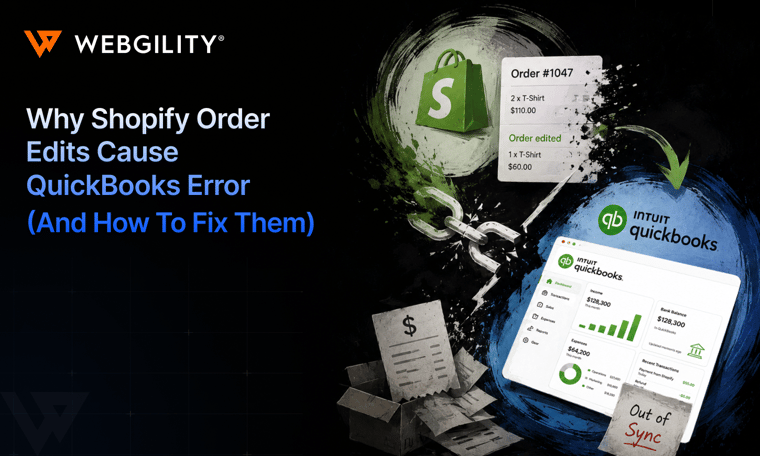
Your dev team runs 10 test orders during a site update. Each averages $80. That's $800 in phantom revenue sitting in your general ledger, with inflated sales tax, incorrect COGS, and inventory movements that never happened.
At month-end, your bookkeeper is left reconciling deposits that don't match payouts, reversing voided invoices, and untangling transactions that should never have reached QuickBooks.
If you're processing hundreds of orders a month across one or more channels, you've probably already hit this problem, or you will soon.
And test orders are only one source of it. Fraudulent transactions, failed payments, cancellations, and gateway declines can all pollute your books if you're not filtering them correctly.
In this guide, we cover the most common types of invalid orders, the damage they cause, and how to configure sync rules that keep them out of QuickBooks for good.
-2.png?width=863&height=953&name=unnamed%20(7)-2.png)
Invalid orders silently damage your financials.
Identifying the culprits (and why each one is uniquely dangerous)
Before you fix the sync logic, you need to understand that not all invalid orders damage your books in the same way.
Each type creates a different accounting distortion.
1. Test orders
Test orders are placed internally to validate checkout flows, payment gateways, new SKUs, or integrations. Many platforms mark these "Paid" once a payment method processes, so if your sync triggers on payment status, they post as legitimate sales.
What makes this uniquely bad: Test orders are invisible at the transaction level. They look identical to real sales. Catching them requires your ops team to manually flag every test to accounting, a communication loop that breaks down at scale.
Example: Your team places a $5 test order to verify a new SKU. QuickBooks records $5 in revenue, a tax liability, COGS, and reduced inventory, for a sale that never happened.
2. Failed or pending payments
This is the most misunderstood category, and the most costly.
Most platforms sync orders at authorization, not capture. That's intentional: early syncing supports inventory reservation and fulfillment workflows. But authorization isn't revenue. If funds are never captured, due to a gateway timeout, expired card, or fraud hold, your books already have a revenue entry that needs reversing.
What makes this uniquely bad: Failed payment orders often look resolved from the platform side. The order is cancelled, ops moves on, and accounting is left holding an entry for money that was never collected, with no one flagging it.
Example: A $1,200 order is authorized but fails capture due to a gateway timeout. It syncs to your GL as revenue. Two days later it's cancelled, leaving accounting to reverse an entry for a transaction that was never funded.
3. Cancelled orders
Most platforms generate a financial record the moment a customer checks out. If your sync triggers at order creation, that record hits QuickBooks before there's any certainty the sale will complete.
What makes this uniquely bad: Individual cancellations are easy to fix. The damage is cumulative. High-volume sellers see dozens of cancellations daily, each one a small cleanup task that compounds into hours of reconciliation work by month-end.
Example: A customer places a $350 order and cancels within 10 minutes. If it synced at creation, accounting now needs a void or reversing entry for a sale that lasted less than 10 minutes.
4. Fraud & high-risk orders
Fraudulent transactions often look like your best orders, high value, clean payment, no flags at checkout, until they become chargebacks weeks later.
What makes this uniquely bad: A chargeback doesn't just reverse a sale. It triggers a chain of correcting entries across revenue, COGS, and cash. Repeated chargebacks distort margin reporting in ways that are hard to trace back to their source.
Example: A $900 order syncs into QuickBooks. Three weeks later, a chargeback arrives. Accounting must reverse revenue, adjust COGS, and reconcile the payout difference, all for a transaction that looked legitimate at the time.
Suggested read: How Manual Orders Break Accounting Sync and Tax Accuracy
What happens when test or fraudulent orders hit your books?
When invalid orders sync into your general ledger, the issue isn’t just a small cleanup. The damage spreads across revenue reporting, tax liability, reconciliation, inventory accuracy, and cash flow visibility.
Here’s how the damage typically shows up:
| Impact area | What goes wrong | How it shows up in your books |
| Revenue | Test or fraud orders recorded as completed sales | Month-end totals are higher than deposits, bookkeeper can't find the delta |
| Sales Tax | Tax calculated on orders that were never fulfilled | Tax payable is overstated; filing requires manual adjustments nobody has time for |
| Chargebacks | Original sale remains; reversal recorded weeks later | Two entries, one ghost transaction, the books never cleanly zero out |
| COGS & Inventory | Inventory reduced and COGS recognized on invalid orders | Stock reports show units that were never shipped; margins look better than they are |
| Reconciliation | Orders don't match actual payouts from payment processors | Processor payout doesn't match QB, could be $50 or $5,000 off, and you won't know which until you dig |
A simple test order scenario
Your team runs 12 test orders during a site redesign. At an average of $85 each, that’s $1,020 in phantom revenue recorded in your GL along with tax and COGS.
At month-end, accounting must identify the test transactions, void or reverse entries, adjust tax, and reconcile mismatched payouts. Even when caught early, this can add hours to close your books. If missed until quarter-end, the problem compounds.
Now multiply that across multiple team members and sales channels.
The chargeback scenario is worse
A $300 fraudulent order clears and syncs to QuickBooks. Revenue, tax, COGS, and inventory are recorded.
Weeks later, a chargeback arrives.
Accounting must then record the refund, reverse revenue, adjust COGS, and reconcile the payout difference. One bad order turns into multiple correcting entries.
Over time, this leads to reporting inconsistencies, distorted margins, cash flow confusion, and longer reconciliation cycles.
Suggested read: How to Reconcile an Account in QuickBooks Online
How to prevent incorrect orders from syncing to QB
The solution isn't a better cleanup at month-end. It’s preventing incorrect orders from syncing to QB in the first place.
In ecommerce accounting, control must happen before the accounting entry is created. That’s where status-based syncing becomes critical.
Instead of pushing every order into QuickBooks or Xero automatically, you define clear eligibility rules so only financially valid, completed transactions hit your books. To ensure this, you must:
1. Sync only financially valid order statuses
A robust ecommerce accounting integration should allow you to define exactly which order statuses are eligible for sync. Think of this as a filter gate between operations and accounting.
Only orders that meet your defined criteria generate revenue, tax, and COGS entries.
Common best practice:
| Sync these ✅ | Block these 🚫 |
| Paid orders (successfully captured) | Test/sandbox orders |
| Fulfilled / shipped orders | Pending payment / authorized but not captured |
| Completed orders | Cancelled orders |
| Verified, settled payments | High-risk / fraud-flagged orders |
Why this matters
Status-based control acts as a filter before accounting entries are created.
Instead of creating void transactions later, invalid transactions simply never reach QuickBooks.
2. Exclude high-risk and fraud-flagged orders
Fraud tools often flag suspicious transactions after an order is placed. If your sync triggers automatically on “Paid” status, those orders can be posted to QuickBooks before they’re fully validated.
The issue isn’t fraud detection; it’s premature syncing.
With properly configured status-based rules, high-risk or review-pending orders won’t hit your GL until they’re verified. This prevents:
-
Premature revenue recognition
-
Inflated COGS
-
Inventory distortion
-
Chargeback-related reversals later
Instead of correcting bad entries weeks later, invalid orders simply never reach your books.
Bases Loaded, a growing sporting goods retailer, was dealing with exactly this: a mix of cancelled orders and premature entries hitting the GL as they scaled across online and brick-and-mortar channels. After implementing structured sync rules through Webgility, only verified, completed orders posted to QuickBooks. They went from $1.9M to $5.5M in revenue , processing 1,000+ orders per day, without adding reconciliation overhead.
3. Align sync rules with your accounting policy
Revenue recognition isn’t one-size-fits-all. Some businesses recognize revenue at payment capture, others at fulfillment or shipment.
If your integration syncs based on platform defaults instead of your accounting policy, your books won’t reflect operational reality.
Configurable sync rules allow you to:
-
Match posting triggers to revenue recognition timing
-
Record tax at the correct stage
-
Keep reconciliation clean across channels
When sync logic mirrors your accounting policy, month-end becomes smoother and your financial data stays accurate by design.
4. Make automation errors and flagged orders visible
Even with the right sync rules in place, some orders may still need attention before they can move cleanly into QuickBooks. The problem is easy to miss when automation is running in the background and users aren't regularly logging into the product.
Webgility's automation summary emails now make those exceptions clearer. Instead of showing the same success message for every automation run, the email reflects what actually happened:
- All clear: When there are no errors or flags, the email simply confirms how many orders were posted.
- Errors found: Even a single posting error changes the email status so users immediately know that orders need attention.
- Flags found: If there are no errors but one or more orders are flagged, the email tells users that those orders are waiting for review before posting.
When errors occur, they appear at the top of the email rather than being buried below successful activity. Error messages are also written in plain language, such as “Product not matched in QuickBooks,” instead of displaying only raw error codes.
A direct “Fix X orders” action takes users to the affected orders in Webgility, while successful posting activity remains visible below the errors.
Flagged orders now get their own section as well. Users can see how many orders are waiting for review, understand what triggered the flag, and go directly to those orders before they turn into posting errors.
If both errors and flags exist, Webgility prioritizes them in the order they need attention:
- Posting errors that need to be resolved
- Flagged orders that need to be reviewed before posting
This closes an important visibility gap in automated accounting. Instead of assuming everything is fine because automation ran, users can quickly see what posted successfully, what failed, and what still needs review without having to search for exceptions manually.
Turning sync into a financial control point!
To implement this level of control, you need more than a basic connector. You need an integration layer that understands ecommerce order lifecycles and allows you to define exactly when financial data becomes accounting data.
Webgility provides this through configurable, status-based sync rules. Rather than syncing orders at creation or payment authorization by default, you choose the trigger points that align with your financial policy whether that’s successful capture, fulfillment, or completion.
This ensures:
-
Revenue is recorded only when it’s financially valid
-
Tax liability reflects actual completed sales
-
COGS aligns with real inventory movement
-
Reconciliation matches processor payouts
| The bigger principle: Clean ecommerce accounting doesn’t happen at reconciliation. It happens at sync. |
Stop cleaning up at month-end. Set your sync rules once and let your books stay clean automatically.
Ready to configure your order status rules and keep your books clean for good? Here's how to get started with Webgility.
FAQs
How do I stop test or cancelled orders from syncing to QuickBooks?
Configure status-based sync rules so that only completed, paid, or fulfilled orders are eligible to post to QuickBooks. Excluding test, pending, cancelled, or review-status orders ensures invalid transactions never create accounting entries in the first place.
Should pending or authorized orders sync to my accounting system?
No. Authorization does not equal revenue. Orders should sync only after payment is successfully captured and verified, in alignment with your revenue recognition policy. Syncing too early can inflate revenue and create reconciliation issues.
How do you handle discrepancies in general ledger?
Trace the discrepancy back to its source (order, payment, or sync rule), reconcile it against your ecommerce and payment data, and correct it using void transactions or proper adjusting entries to maintain a clean audit trail.
.png?width=128&name=image%20(1).png)