
.png?width=32&height=32&name=image%20(3).png)
 August 26, 2026
 9 min read
Contents

Key Takeaways:
- Multi-channel ecommerce software helps sellers reduce overselling, manual errors, and fragmented workflows across platforms
- The right tool depends on your biggest need: accounting automation, inventory management, storefront management, or fulfillment
- Webgility stands out for businesses that need both ecommerce accounting automation and inventory sync across channels
- Automation can save hours each month by eliminating manual bookkeeping, reconciliation, pricing updates, and order syncing
- Businesses should start by solving their biggest operational bottleneck, then add tools as they scale
Running an ecommerce business across multiple sales channels like WooCommerce, Shopify, or Amazon can feel overwhelming. Many retailers face inventory accuracy challenges, leading to problems like overselling or mistakes in fulfilling orders.
On top of that, manually syncing product listings, prices, and promotions across various platforms can be frustrating and time-consuming.
But here’s the good news: multi-channel ecommerce solutions can simplify the process. These tools automate repetitive tasks, bring all your operations together in one place, and minimize errors.
In this article, we’ll explore the top multi-channel ecommerce solutions to help you streamline your workflows, safeguard your data, and grow your ecommerce business.
Multi-channel ecommerce software: An overview
|
Name |
Categories |
Key Features |
Pricing plans |
|
Webgility |
Multichannel Ecommerce Accounting Automation and Inventory Management |
- Real-time Inventory Updates - Catalog Transfer & Product Listings - Sync Pricing Updates - QuickBooks Enterprise Compatibility - Automated Purchase Orders |
$49 Basic (Online) $99 Pro (Online) $109 Plus (Desktop) $199 Advanced (Desktop) $399 Premium (Desktop) |
|
Synder |
Multichannel Ecommerce Accounting Automation and Inventory Management |
- Inventory Management - Customizable Invoicing Solutions - Comprehensive Metrics - Bulk Transaction Management - Multi-Currency Support |
$52 Medium - 500 orders $92 Scale - 1K orders $220 Large - 10K orders |
|
LinnWorks |
Multichannel Inventory Management |
- Centralized Inventory Management - Inventory Forecast Demand - Order Management - Real-time Tracking - Track Performance Across Sales Channels |
Contact support for pricing |
|
CedCommerce |
Multichannel Inventory Management |
- Multichannel Integration - Centralized Inventory Management - Automated Order Processing - Real-Time Data Synchronization - Product Mapping and Bulk Uploads |
- Basic Plan: Free plan - Premium Plan: $9.99/Month - Custom Built: Contact support |
|
WooCommerce |
Shopping Platforms |
Product Management - Shipping Options - Inventory Management - Payment Gateway Integration - Bulk Product Management |
Pricing varies based on services and integrations |
|
Adobe Commerce (Magento) |
Shopping Platforms |
- Centralized Management - Multi-Channel Fulfillment - Seamless Integration - Advanced Personalization |
Contact support for pricing |
|
ShipBob |
Fulfillment Solutions |
- Network of Fulfillment Centers - Inventory Management - Order Management - Real-Time Tracking - Shipping Rate Calculator - Analytics and Reporting - Custom Packaging and Branding |
Request a quote |
Best 7 multi-channel ecommerce solutions in 2026
Choosing a suitable multi-channel ecommerce platform can be a hassle for many, so we’ve put together the best solutions to help you grow your business.
Multichannel ecommerce accounting automation + inventory management
1. Webgility
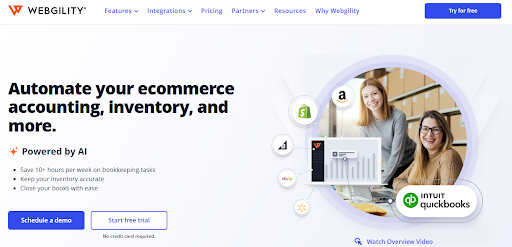
Webgility is tailored for multichannel ecommerce platforms, particularly those using accounting systems like QuickBooks and Xero. It provides a unified solution for managing finances and enables ecommerce owners to automate bookkeeping, accounting, and inventory management.
It integrates with leading marketplaces, like Amazon, eBay, Walmart, and Etsy, and ecommerce stores, like Shopify, WooCommerce, BigCommerce, and Magento and POS systems as well.
Key features for Webgility
- QuickBooks Online, Desktop & Enterprise compatibility: The solution is compatible with QuickBooks Enterprise Advanced Inventory. It automatically posts sales in near real time, keeping your accounts and inventory up to date
- Catalog transfer & product listings: You can easily create new product listings or transfer your online catalog across all channels to QuickBooks. This simplifies inventory and sales tracking by consolidating product data from various channels into a unified system
- Sync pricing updates: Webgility lets you sync pricing updates directly from QuickBooks to your sales channels. This ensures that your pricing is consistent across all platforms and helps streamline the management of price adjustments
- Automate purchase orders: The service generates purchase orders (POs) for vendors in QuickBooks based on your stock levels. This ensures timely inventory restocking and reduces manual inventory management efforts
- Plan usage tracker: Webgility helps users stay ahead of their plan limits with a usage tracker on the dashboard. Once usage reaches 70% of the plan limit, it shows the current usage percentage, billing period dates, and days remaining, with alerts that update as usage increases. Users can also access Manage Plan directly when they need additional capacity
Wine RayZyn used Webgility to connect Shopify, Amazon, UPS, FedEx, and QuickBooks. This helped eliminate double bookings, reduce manual errors, streamline daily transactions, and give the team better visibility into key business metrics.
Pros
- Excellent automation features save time and reduce errors
- Integration with QuickBooks is seamless and efficient
- Scalable for businesses of various sizes
Cons
- Requires initial setup and training
Pricing
Annual pricing plan:
- $69 Pro
- $129 Advanced
- $299 Complete
- $599 Complete Enterprise
2. Synder
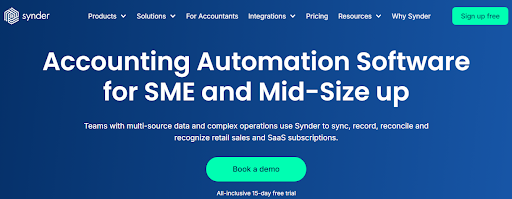
Synder is an ecommerce accounting solution that integrates various sales channels and accounting systems. It integrates with over 30 ecommerce platforms like eBay, BigCommerce, Shopify, and Amazon. In addition, it integrates with accounting systems like QuickBooks, Xero and Sage Intact.
This helps handle transactions, inventory, and financial reporting across different channels. It provides a unified view for business owners.
Key features for Synder
- Real-time inventory management: The platform offers real-time inventory synchronization across all sales channels, which helps businesses maintain accurate stock levels and avoid overselling
- Customizable invoicing solutions: You can create and send customized invoices, including one-time and recurring billing options
- Comprehensive metrics: Users can monitor critical metrics such as revenue, channel-wise performance, total orders, and inventory turnover
- Bulk transaction management: The software allows you to reverse transactions in bulk or individually without creating duplicates
Pros
- Affordable for startups and small businesses
- Strong accounting automation capabilities
- The software is designed with a user-friendly interface
Cons
- Lacks advanced inventory management features
- Limited ability to transfer cash payments into different accounts
- There is no POS integration and limited scalability
Pricing
Annual pricing:
- $52 Medium: 500 orders | Unlimited channels
- $92 Scale: 1K orders | Unlimited channels
- $220 Large: 10K orders | Unlimited channels
Check Synder’s pricing page for updated pricing.
Multichannel inventory management
3. Linnworks
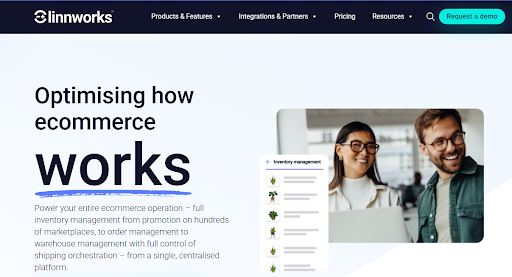
Linnworks is a multichannel inventory management software designed to streamline ecommerce operations for retailers selling across platforms.
This cloud-based solution centralizes inventory, order processing, and shipping logistics, making it easier for businesses to manage their sales channels.
Key features for Linnworks
- Centralized inventory management: Linnworks allows you to manage and sync inventory across multiple sales platforms from a single interface. It ensures real-time synchronization of stock levels.
- Inventory forecast demand: It helps predict how much inventory you need to reorder to fulfill orders in the coming days or weeks.
- Order management: Linnworks lets you create, edit, cancel, or add order tags. It also lets you choose how to pack orders based on preset criteria.
- Real-time tracking: Easily track and manage inventory across multiple warehouses and bin locations from a central dashboard for accuracy.
Pros
- Scalable for growing businesses
- Excellent for managing inventory across multiple platforms
- Real-time inventory management
Cons
- Learning curve for new users
- Pricing is on the higher side for smaller operations
Pricing
To get Linnworks pricing, you’ll need to contact their support team. The cost is based on the number of orders you process through the platform.
4. CedCommerce
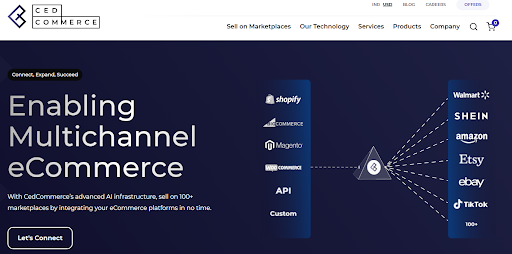
CedCommerce is another multi-channel ecommerce software that helps you to manage inventory across various ecommerce platforms. You can integrate with platforms like Zoho Inventory, Amazon, WooCommerce, and Magento. That helps to facilitate efficient inventory and order management.
Key features for CedCommerce
- Multichannel integration: CedCommerce provides integration solutions that allow sellers to connect with over 100 marketplaces, including major platforms like Amazon, eBay, and Walmart
- Centralized inventory management: It enables you to manage inventory from multiple sales channels through a single dashboard. This centralization helps track stock levels and ensure inventory data is synchronized across all platforms in real time
- Automated order processing: The platform automates the order processing workflow, updating inventory levels automatically when orders are placed
- Real-time data synchronization: It ensures that product prices and inventory levels are synchronized in real time across all connected marketplaces
Pros
- Integrate with over 100 marketplaces
- Provides a bulk upload feature
- Integration with various shipping, accounting, and marketing solutions
Cons
- Require technical expertise for customizations
Pricing
- Basic Plan: Free
- Premium Plan: $9.99/Month
- Custom Built: Contact their customer support
Shopping platforms
5. WooCommerce
WooCommerce is an ecommerce platform that integrates with WordPress, allowing businesses to create and manage online stores. Its capabilities extend to multi-channel selling, enabling sellers to reach customers across platforms like Amazon, eBay, and Etsy.
It provides a single interface to manage multiple sales channels, allowing users to handle orders, inventory, and customer data from one place.
Key features of WooCommerce
- Product management: WooCommerce allows you to manage products by quickly adding, categorizing, and managing inventory. Sellers can filter products by categories or stock status
- Shipping options: The platform allows customizable shipping settings, including shipping zones and methods. You can automate shipping through integrations with major carriers like FedEx and USPS
- Inventory management: WooCommerce includes tools for tracking stock levels and managing orders efficiently. Users can access detailed analytics on stock and order status through the dashboard
- Payment gateway integration: It supports a wide range of payment options, including PayPal, Stripe, and direct bank transfers
Pros
- The basic version of WooCommerce is free to use
- Enables management of inventory and orders from various marketplaces in one place
Cons
- Due to its extensive features, new users may find it challenging to navigate the platform initially
Pricing
Its pricing depends on the services and integrations you want to include in your ecommerce. Here’s the detailed pricing plan
6. Adobe Commerce (Magento)

Adobe Commerce (formerly known as Magento) offers businesses tools to manage and optimize their online stores. It is especially valuable for companies looking to sell across multiple channels and Adobe marketplaces like Amazon, eBay, and social media.
The software lets businesses handle B2B and B2C operations from one platform. This makes managing product catalogs, setting prices, and interacting with customers easier.
Key features Adobe Commerce (Magento)
- Centralized management: The platform provides a hub for overseeing multiple brands, sales channels, and geographical markets.
- Multi-channel fulfillment: It optimizes order fulfillment processes by linking online and offline channels. Features like “click and collect” and inventory reservations enhance customer convenience.
- Seamless integration: Adobe Commerce supports integrating various third-party applications and services through its robust API. This includes connections to ERP systems, CRM platforms, and payment gateways.
- Advanced personalization: Using Adobe Sensei's AI capabilities, Adobe Commerce offers personalized shopping experiences by analyzing customer behavior and preferences. This includes tailored product recommendations and dynamic content adjustments.
Pros
- Multi-language and multi-currency support.
- Access to a vast library of third-party extensions and a supportive community.
- AI-driven analytics to refine customer engagement and boost sales.
Cons
- The platform can be challenging to set up and manage without technical expertise.
Pricing
Contact their customer support for a pricing plan.
Fulfillment Solutions
7. ShipBob
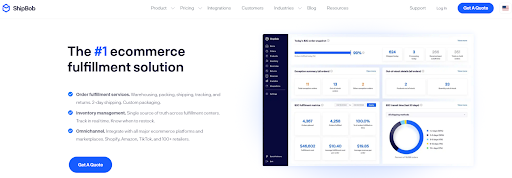
ShipBob is a fulfillment solution designed for multi-channel ecommerce businesses. It supports fulfillment across over 100 retailers like Shopify, Amazon, and TikTok. This integration allows businesses to manage inventory and orders from a single dashboard.
Key features for ShipBob
- Network of fulfillment centers: With over 50 fulfillment centers strategically located in the US, Canada, the UK, Europe, and Australia, ShipBob minimizes shipping times and costs by storing inventory closer to customers
- Inventory management: It provides real-time tracking of inventory levels across multiple warehouses. This helps businesses to optimize stock levels and reduce stockouts
- Order management: ShipBob facilitates the processing of orders from various sales channels, ensuring timely fulfillment
- Real-time tracking: The solution lets customers track their orders in real time, enhancing transparency
Pros
- A vast network of fulfillment centers
- Integrates easily with major ecommerce platforms
- Provides real-time tracking for shipments and detailed analytics
Cons
- ShipBob's Warehouse Management System (WMS) is currently only available for brands with US warehouses
- Inconsistent customer service experiences
Pricing
You can request a quote by providing your contact information, company details, ecommerce platform, and shipment volume.
Challenges multi-channel ecommerce software can solve
Multi-channel ecommerce software can solve various common challenges faced by businesses operating across multiple platforms. Here’s how it addresses each of the mentioned issues:
1. Inventory discrepancies
Manual inventory updates across multiple ecommerce channels can lead to overselling, stock discrepancies, missed revenue, and customer dissatisfaction. As businesses expand, real-time inventory syncing becomes essential to maintain accurate stock levels and reduce costly errors.
Rider Shack faced these challenges while managing over 13,000 products across its retail store, Magento site, and QuickBooks POS. With Webgility, they eliminated inventory errors, streamlined inventory management, and saved 15 hours of manual work each week.
2. Manual bookkeeping, journal entry, and reconciliation
Manual accounting tasks, such as journal entries and reconciliation, are time-consuming. The hours you spent on those tasks could be better spent on growth activities like product development or marketing. Also, Manual processes increase the risk of errors, such as misclassified transactions or reconciliation mismatches. This can negatively impact your finances.
Multi-channel ecommerce software can solve this by streamlining workflows. The solution enables you to generate reports, reconcile transactions, and manage books quickly without repetitive data entry.
For instance, Party Machines, a leader in foam party equipment, faced the challenge of manual bookkeeping. Their founder, Greg Gordon, spent up to 16 hours a month entering sales revenue and expenses into QuickBooks. After integrating Webgility into their system, they now saved 8-16 hours each month on bookkeeping tasks.
3. Burgeoning tech stack
As businesses grow, they often add more tools for sales, accounting, marketing, and operations. Over time, this can create a fragmented tech stack, making it harder to track performance, measure ROI, and understand which channels are actually profitable. A unified ecommerce platform brings key data together, simplifies reporting, and supports more informed decisions.
Danwidth chose Webgility to connect QuickBooks with sales channels like Shopify, Amazon, and eBay. This helped automate bookkeeping, reduce manual errors, and give sellers clearer visibility into costs, profits, and operational expenses across their ecommerce business.
4. Manual updating of prices and product listings
Updating product listings and prices manually across multiple channels is time-consuming, tedious and error-prone. Mistakes in pricing or listings can lead to lost sales, customer complaints, and more strain on operations.
Automated eCommerce software syncs your product data across platforms in real-time. It allows you to easily make bulk updates, reducing errors and freeing time for more important tasks, such as customer engagement and expansion.
Conclusion
Multi-channel ecommerce platforms help businesses manage growth by streamlining accounting, inventory, orders, and fulfillment across sales channels. The right solution depends on your biggest challenge, whether that’s syncing orders, managing inventory, or automating bookkeeping.
While no single tool can solve every multi-channel challenge, Webgility is a strong option for sellers that need both accounting automation and inventory management. It helps connect sales channels, accounting systems, and shipping tools so operations run more smoothly as the business scales.
It also goes a step further than software alone: accounting specialists review and certify your books each month, so your multi-channel numbers are verified by a person, not just a sync.
FAQs
How do multichannel ecommerce platforms price themselves?
Multichannel ecommerce platforms typically offer tiered pricing based on features, order volumes, and the number of sales channels. Costs can range from basic packages for startups to premium plans for larger businesses. Starting around £99 per month for limited features, it can scale up with added capabilities and order management options.
What hidden fees should I know when choosing a multichannel ecommerce software?
Hidden fees can include transaction fees for payment processing, costs for additional plugins or features, and charges for exceeding order limits. Additionally, some platforms may impose fees if you don’t use their preferred payment gateways or if you require custom integrations.
What are some common concerns when adopting multichannel software?
Common concerns include integration difficulties with existing systems, potential hidden costs, and the learning curve associated with new software. Businesses may also worry about data synchronization across channels and ensuring consistent customer experiences.
Is it worth the investment for businesses with only two sales channels?
Investing in multichannel software can still benefit businesses with two sales channels. It can enhance efficiency, streamline operations, and provide insights into customer behavior. However, the decision should consider potential growth and whether the software’s features align with current needs.
.png?width=56&height=56&name=image%20(3).png) Yvette Zhou
Yvette Zhou


.png?width=24&height=24&name=image%20(1).png) Yash Bodane
Yash Bodane

