Enter your email to watch


Why Real-Time Accounting Beats Month-End Bookkeeping
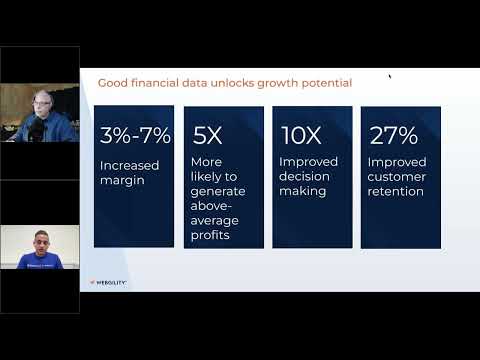
Traditional month-end bookkeeping tells you what happened. Real-time ecommerce accounting tells you what's happening now. In this partner webinar, Webgility CEO Parag Mamnani and Seth David explain how Amazon sellers can automate accounting, improve profitability, manage cash flow, and make faster business decisions using order-level financial data.
- Why ecommerce accounting is more complex than traditional bookkeeping.
- The difference between month-end accounting and real-time accounting.
- How order-level accounting improves financial visibility.
- Managing Amazon settlement reports and marketplace fees.
- Improving product-level profitability with accurate financial data.
- Why cash flow matters more than profit.
- Optimizing inventory turnover for healthier cash flow.
- Using real-time financial insights to improve pricing and growth decisions.
- Leveraging QuickBooks automation for ecommerce bookkeeping.
- Why automation eliminates manual accounting work and improves accuracy.
Why Real-Time Ecommerce Accounting Is a Competitive Advantage
Most ecommerce businesses review their books after the month has ended. By then, opportunities have already been missed. Real-time accounting changes that by giving merchants financial visibility every day instead of every few weeks.
In this webinar, Webgility CEO Parag Mamnani joins ecommerce accounting expert Seth David to explain why real-time accounting has become one of the biggest competitive advantages for Amazon sellers and multichannel ecommerce businesses.
The discussion begins by explaining why ecommerce accounting is uniquely challenging. Financial data comes from multiple sales channels, payment processors, banks, shipping providers, taxes, and inventory systems. Unlike traditional businesses, ecommerce sellers must reconcile marketplace fees, multiple payment methods, inventory movement, sales tax, and settlements before they truly understand profitability. This complexity makes manual bookkeeping increasingly difficult as a business grows.
The speakers argue that businesses relying solely on monthly reconciliations are operating with outdated information. Simply matching bank deposits to accounting records doesn't reveal product profitability, order costs, or marketplace fees. Real-time accounting captures every order as it happens, allowing business owners to monitor margins, cash flow, inventory, and operational performance throughout the month instead of waiting for settlement reports.
One of the webinar's biggest themes is profitability. Understanding revenue alone isn't enough. Merchants must account for fulfillment costs, advertising, logistics, marketplace commissions, shipping, and inventory expenses before they know which products truly generate profit. Order-level accounting provides this visibility and helps sellers optimize pricing, product mix, and marketing investments based on actual margins instead of assumptions.
Cash flow receives equal attention. The presenters explain that businesses can be profitable on paper yet still struggle because they lack available cash. Inventory turnover becomes one of the most important levers ecommerce businesses can control. Better inventory planning reduces stockouts, prevents excess inventory, and frees working capital for growth. Accurate financial reporting also makes it easier to secure financing when expansion opportunities arise.
Automation ties everything together. Rather than manually downloading reports, importing spreadsheets, or creating summary journal entries, businesses should automate data flowing from marketplaces into QuickBooks. Automated accounting reduces bookkeeping time, improves accuracy, simplifies reconciliations, and provides daily financial visibility that supports faster decision-making. The presenters emphasize that summary-level accounting may satisfy compliance requirements, but detailed order-level accounting delivers the insights needed to grow an ecommerce business.
Their conclusion is simple: businesses that automate accounting and monitor financial performance in real time gain better control over profitability, cash flow, inventory, and long-term growth.
What is real-time ecommerce accounting?
Real-time accounting records ecommerce transactions as they occur, providing continuous visibility into revenue, expenses, profitability, and cash flow rather than waiting until month-end.
Why is Amazon accounting more difficult?
Amazon sellers must reconcile settlements, marketplace fees, shipping costs, inventory, taxes, and multiple transaction types, making ecommerce accounting significantly more complex than traditional bookkeeping.
Why is order-level accounting important?
Order-level accounting helps merchants understand the true profitability of every sale by including fees, shipping, fulfillment, and other operating costs.
Why is cash flow more important than profit?
A business can show accounting profits but still struggle if cash isn't available to fund inventory or operations. Monitoring cash flow daily helps businesses make better financial decisions.
How does Webgility support real-time accounting?
Webgility automatically syncs ecommerce orders, settlements, and financial transactions into QuickBooks, enabling accurate order-level accounting, faster reconciliation, and better financial visibility.
Watch More








Find out what your operational gaps are actually costing you.
Our team of experts will help surface your operations and finance concerns. In 30 minutes, we will discuss your channels, accounting setup, leakages, inventory inconsistencies, and close process.