Enter your email to watch


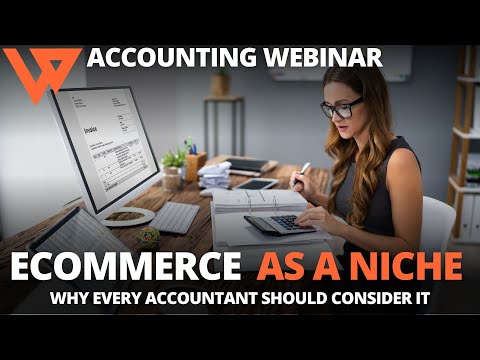
Why Ecommerce Accounting Is the Best Niche for Modern Accountants
Thinking about specializing your bookkeeping practice? Learn why ecommerce accounting offers a growing market with less competition, higher-value advisory opportunities, and how automation tools simplify inventory, sales tax, and multichannel accounting.
- Why ecommerce accounting is a growing niche for accountants and bookkeepers.
- Common misconceptions about inventory, sales tax, and multichannel accounting.
- How ecommerce accounting automation reduces manual bookkeeping.
- Best practices for managing Shopify, Amazon, and other ecommerce channels in QuickBooks.
- Why order-level reconciliation leads to better financial reporting.
- How accountants can transition from compliance work to higher-value advisory services.
Why Every Accountant Should Consider Ecommerce Accounting as a Niche
For many accountants and bookkeepers, ecommerce accounting feels intimidating. Inventory, sales tax, multiple marketplaces, payment processors, and thousands of transactions can make it seem much more complicated than traditional bookkeeping.
The reality is different.
As discussed in this webinar, ecommerce accounting is detailed, but it is not inherently more difficult than bookkeeping for other industries. The biggest difference is having the right workflow and using the right ecommerce accounting software to automate repetitive tasks.
One of the biggest opportunities for accounting professionals today is the growing demand for ecommerce specialists. Millions of businesses now sell through Shopify, Amazon, Walmart, Etsy, eBay, and other online channels. While the number of ecommerce sellers continues to grow, relatively few accountants specialize in ecommerce bookkeeping, creating an excellent opportunity to build a niche practice.
Many accountants avoid ecommerce because they worry about inventory management, sales tax, or handling thousands of online orders. Modern ecommerce accounting automation has removed much of that complexity. Instead of manually entering transactions, businesses can automatically sync orders, payouts, refunds, shipping costs, and fees directly into QuickBooks.
During the webinar, the speakers explain that inventory accounting follows the same fundamental principles as any business. Buy inventory, sell inventory, track costs, and understand profitability. While ecommerce introduces additional details like multiple sales channels and payment processors, the accounting concepts remain the same.
Sales tax is another area that often discourages accountants. Rather than managing constantly changing tax rules manually, many successful ecommerce businesses rely on dedicated tax platforms while using QuickBooks Ecommerce Accounting to accurately record sales tax liabilities and reconciliations. This allows accountants to spend less time on compliance and more time helping clients understand their financial performance.
The webinar also demonstrates how ecommerce accounting software like Webgility simplifies multichannel bookkeeping. Orders from Shopify, Amazon, and other sales channels can automatically flow into QuickBooks with detailed transaction records, payment fees, inventory updates, and order-level reconciliation. This provides accurate financial reporting without requiring manual data entry.
Perhaps the biggest takeaway is that accountants should focus less on bookkeeping mechanics and more on becoming strategic advisors. When financial data is accurate and automatically synchronized, accountants can help clients understand margins, cash flow, inventory performance, and channel profitability. Those conversations create significantly more value than simply recording transactions.
For firms looking to differentiate themselves, ecommerce accounting remains one of the fastest-growing and least saturated accounting specialties. With the right processes and automation tools, accountants can confidently support online businesses while building a highly profitable niche practice.
What is ecommerce accounting?
Ecommerce accounting is the process of recording, reconciling, and reporting financial transactions from online sales channels like Shopify, Amazon, Walmart, Etsy, and eBay.
Why should accountants specialize in ecommerce accounting?
Ecommerce businesses are growing rapidly, but relatively few accountants specialize in serving them. This creates a strong opportunity to build a niche practice with higher-value advisory services.
Is ecommerce bookkeeping more difficult than traditional bookkeeping?
Not necessarily. Ecommerce bookkeeping involves more transaction volume and multiple sales channels, but modern ecommerce accounting software automates much of the process.
How does Webgility help accountants?
Webgility automates order syncing, inventory updates, QuickBooks payout reconciliation, fee tracking, and order-level reconciliation across multiple ecommerce platforms.
Does Webgility support Shopify and Amazon?
Yes. Webgility integrates with Shopify, Amazon, Walmart, eBay, Etsy, and many other ecommerce platforms while syncing data directly into QuickBooks.
Watch More





Find out what your operational gaps are actually costing you.
Our team of experts will help surface your operations and finance concerns. In 30 minutes, we will discuss your channels, accounting setup, leakages, inventory inconsistencies, and close process.