Enter your email to watch

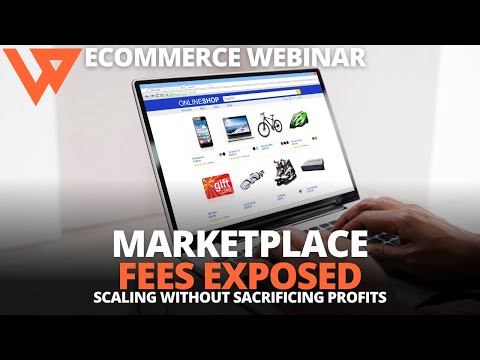
Marketplace Fees Are Costing You More Than You Think
Marketplace fees extend far beyond referral commissions. This webinar explains the hidden costs of selling across Amazon, Shopify, Walmart, Etsy, and other ecommerce platforms, showing merchants how to calculate true profitability, reduce unnecessary expenses, and make smarter expansion decisions.
- The major marketplace fees every ecommerce seller pays.
- How payment processing impacts profitability.
- Understanding referral, listing, fulfillment, storage, and chargeback fees.
- Why high sales don't always mean high profits.
- Practical ways to reduce ecommerce operating costs.
- When to expand into new marketplaces.
- The difference between multichannel and omnichannel commerce.
- Using analytics to improve product profitability.
- How automation reduces accounting and operational costs.
- Leveraging ecommerce data for better business decisions.
Marketplace Fees Exposed: The Hidden Costs Affecting Ecommerce Profitability
Growing an ecommerce business isn't just about increasing sales. It's about understanding every expense associated with each order. While marketplaces like Amazon, Shopify, Walmart, Etsy, and eBay make it easier to reach customers, each platform introduces fees that directly impact profitability.
This webinar explains how marketplace fees influence ecommerce growth and why successful businesses look beyond revenue when evaluating performance.
Most sellers are familiar with marketplace subscription plans, but many underestimate the full range of costs involved. Beyond monthly subscriptions, businesses often pay listing fees, referral commissions, payment processing charges, fulfillment expenses, inventory storage fees, shipping costs, and chargeback fees. Individually these expenses may appear manageable, but together they can dramatically reduce profit margins.
One of the webinar's biggest takeaways is that sales volume alone doesn't determine profitability. A product that sells thousands of units may actually generate less profit than a slower-selling product with lower storage costs, lighter shipping weights, or higher margins. Businesses need complete visibility into acquisition costs, fulfillment expenses, marketplace fees, and operating costs before making inventory or pricing decisions.
The webinar also shares practical ways to reduce unnecessary costs. Sellers should actively monitor available marketplace credits, resolve claims and returns quickly, optimize shipping methods, bundle products where appropriate, and carefully evaluate fulfillment strategies for oversized or heavy inventory. Even seemingly small operational improvements can create meaningful savings as order volume grows.
Expansion is another area where many businesses make expensive mistakes. Rather than launching onto every marketplace immediately, merchants should first confirm that their existing sales channels are profitable. Understanding the fee structure, subscription costs, and operational requirements of each marketplace allows businesses to expand strategically while protecting cash flow and profitability.
Beyond cost management, the webinar highlights the importance of analytics and automation. By centralizing financial and operational data across marketplaces, businesses gain better visibility into product profitability, customer behavior, inventory performance, and growth opportunities. Automation further reduces manual accounting work by syncing orders, payouts, inventory, shipping information, and financial data into accounting software like QuickBooks. This combination of accurate financial reporting and automation enables faster, more confident business decisions while reducing administrative overhead.
Ultimately, understanding marketplace fees isn't simply about reducing expenses. It's about building a business that grows profitably. Sellers who monitor every cost, leverage analytics, automate repetitive processes, and make data-driven expansion decisions are far more likely to achieve sustainable long-term success.
What are marketplace fees?
Marketplace fees include listing fees, referral commissions, payment processing charges, fulfillment costs, storage fees, shipping expenses, and other operational costs charged by ecommerce platforms.
Why aren't my ecommerce profits matching my sales?
High sales don't always produce high profits because fulfillment costs, storage fees, advertising, shipping, payment processing, and marketplace commissions reduce overall profitability.
When should I expand into another marketplace?
Expand only after your current sales channel is consistently profitable and you've evaluated the fees, operational requirements, and expected return of the new marketplace.
What's the difference between multichannel and omnichannel ecommerce?
Multichannel businesses sell across multiple platforms independently, while omnichannel businesses connect every sales channel, customer interaction, inventory system, and operational workflow into one integrated ecosystem.
How does Webgility help improve marketplace profitability?
Webgility automates Ecommerce Accounting Automation by syncing marketplace orders, payouts, inventory, shipping, and financial data with QuickBooks, giving businesses accurate profitability reporting while reducing manual accounting work.
Watch More



Find out what your operational gaps are actually costing you.
Our team of experts will help surface your operations and finance concerns. In 30 minutes, we will discuss your channels, accounting setup, leakages, inventory inconsistencies, and close process.