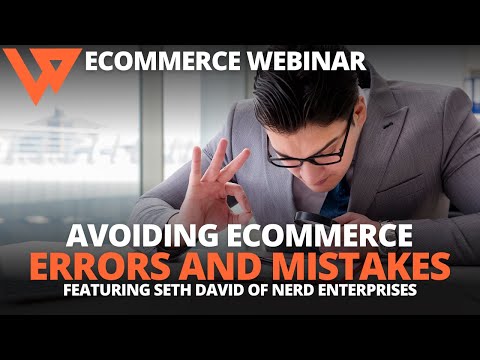
Enter your email to watch


The Ecommerce Seller's Guide to Avoiding Costly Accounting Mistakes
Accounting mistakes can quietly drain profits, create cash flow issues, delay funding, and lead to tax compliance problems. This webinar explains the most common ecommerce accounting errors, why they happen, and how sellers can build better financial processes using automation, inventory management, regular reconciliation, and accurate reporting.
- Learn the most common ecommerce accounting errors and what causes them.
- Understand how manual data entry leads to duplicate, missing, and incorrect transactions.
- Discover why inventory management directly impacts profitability and customer satisfaction.
- Learn the importance of regular bookkeeping, reconciliation, and financial reporting.
- Understand how poor expense tracking affects cash flow and tax compliance.
- Learn the difference between revenue and profit when making business decisions.
- See real-world examples of inventory, accounting, tax, and budgeting mistakes.
- Discover why automation reduces human error across ecommerce accounting.
- Learn how analytics improve inventory planning, profitability, and forecasting.
- Understand best practices for managing multichannel ecommerce accounting.
The Ecommerce Seller's Guide to Avoiding Costly Accounting Mistakes
Successful ecommerce businesses don't usually fail because of one catastrophic accounting error. Instead, they slowly lose money through small mistakes that compound over time.
This webinar explores the most common Ecommerce Accounting Mistakes and explains how sellers can build processes that reduce risk while improving financial visibility.
Many accounting problems begin with manual work. Typing transactions by hand increases the chances of duplicate entries, missing transactions, transposed numbers, reconciliation issues, and inaccurate financial records. While each error may seem minor, they eventually affect reporting, cash flow, and decision-making.
Inventory is another major challenge.
Without accurate inventory tracking, businesses either overstock products that tie up cash or run out of inventory and lose sales. When inventory isn't synchronized across multiple channels, sellers struggle to forecast demand, fulfill orders, and understand true profitability. Automated inventory synchronization helps maintain accurate stock levels across marketplaces while keeping QuickBooks updated in real time.
Another common mistake is treating bookkeeping as an occasional task instead of a recurring process.
Businesses that postpone posting transactions or reconciling their books often lose visibility into their financial performance. Regular reconciliation creates reliable financial reports, supports funding applications, and provides confidence in monthly decision-making. Many successful ecommerce businesses establish a consistent schedule for posting orders and reconciling their books, while accounting automation removes much of the manual effort.
Expense tracking is equally important.
Marketing costs, refunds, taxes, utilities, subscriptions, and shipping all affect profitability. If these expenses aren't recorded accurately, businesses struggle to understand their margins and may face compliance risks during tax season. Proper expense tracking and automated synchronization help ensure taxes, refunds, and fees are reflected correctly inside accounting software.
The webinar also highlights a mistake many growing sellers make: confusing revenue with profit.
Revenue shows how much money comes into the business, but profit only exists after expenses are deducted. Without budgeting, cash flow planning, and profitability analysis, businesses may overspend, miss payment deadlines, or make poor investment decisions. Analytics provide the visibility needed to understand which products generate healthy margins and where costs are reducing profitability.
The recurring theme throughout the webinar is simple: most accounting mistakes originate from manual processes.
By automating order imports, inventory updates, expense tracking, reconciliation, and reporting, ecommerce businesses reduce human error while giving accountants cleaner financial data to work with. The result is faster month-end close, more accurate books, and better business decisions.
What are the most common ecommerce accounting mistakes?
Common mistakes include manual data entry errors, duplicate transactions, missing sales, poor inventory tracking, irregular reconciliation, incorrect expense tracking, tax compliance issues, and confusing revenue with profit.
Why does manual bookkeeping create accounting errors?
Manual entry increases the likelihood of duplicate, missing, or incorrect transactions, which leads to inaccurate financial reports and reconciliation problems.
Why is inventory management important for ecommerce accounting?
Inventory directly affects cash flow, profitability, purchasing decisions, customer satisfaction, and financial reporting. Accurate inventory tracking helps prevent stockouts and excess inventory.
How often should ecommerce businesses reconcile their books?
The webinar recommends establishing a consistent reconciliation schedule based on business complexity and transaction volume, with many businesses reconciling every few weeks or monthly.
Why is expense tracking important?
Accurate expense tracking helps businesses understand profitability, maintain tax compliance, prepare financial statements, and avoid costly surprises during tax season.
Watch More





Find out what your operational gaps are actually costing you.
Our team of experts will help surface your operations and finance concerns. In 30 minutes, we will discuss your channels, accounting setup, leakages, inventory inconsistencies, and close process.