Enter your details to watch

John May
Ecommerce Expert
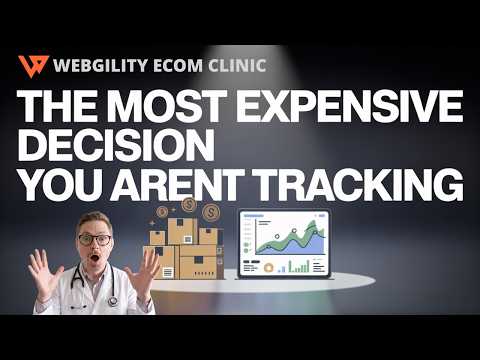
The Most Expensive Decision You're Not Tracking
- Understand the true cost of inventory beyond supplier pricing.
- Learn how carrying costs reduce profitability over time.
- Discover why every purchase order is a financial decision.
- Evaluate inventory using opportunity cost, not just purchase price.
- Learn practical reorder frameworks based on cash flow and inventory turnover.
- Reduce dead stock while improving ecommerce profitability.
Inventory Carrying Cost: The Hidden Expense Behind Every Purchase Order
Most ecommerce businesses know exactly what they pay suppliers. Far fewer know what it actually costs to own inventory.
This webinar explores why every purchase order is more than an operations decision. It is a financial investment that affects cash flow, profitability, and future growth. As the presenter explains, every purchase order is essentially a bet, and better businesses simply make better bets.
The biggest mistake many ecommerce sellers make is focusing only on unit cost. In reality, the purchase price is only the beginning. Inventory also carries storage expenses, insurance, tied-up cash, and the risk that products never sell. Dead stock often forces markdowns that quietly erode margins long before business owners notice.
The webinar introduces the concept of inventory carrying cost, which commonly ranges between 20% and 30% of inventory value annually. Those costs include warehouse storage, Amazon FBA fees, insurance, shrinkage, product obsolescence, and the opportunity cost of capital that could have been invested elsewhere.
Using a practical example, the session compares three inventory outcomes. In one scenario, demand remains strong and the purchase generates healthy profits. In another, sales slow, causing inventory to sit longer while carrying costs increase and margins decline. In the worst case, inventory becomes dead stock, requiring heavy discounts that lock up cash and dramatically reduce profitability. The purchase price never changes, but the financial outcome changes completely.
The discussion then shifts to opportunity cost, a metric many businesses overlook. Instead of purchasing additional inventory, the same capital could fund advertising, launch new products, reduce debt, or simply strengthen cash reserves. The goal is not to own more inventory. The goal is to deploy cash where it generates the highest return.
To make smarter purchasing decisions, the webinar recommends asking three questions before placing every reorder:
- What is the true cost after freight, duties, and carrying costs?
- How quickly will the inventory sell?
- Could that cash generate a better return somewhere else?
Having reliable financial data makes these decisions much easier. By combining Ecommerce Accounting Automation, QuickBooks Inventory Sync, and Ecommerce Inventory Sync, businesses gain better visibility into inventory value, purchasing trends, and profitability across every sales channel. Instead of guessing reorder quantities, they can make data-driven decisions backed by accurate financial reporting.
Inventory should never be viewed as simply a product sitting on a shelf. It represents cash, risk, and future profitability. Businesses that understand inventory carrying costs make better purchasing decisions, improve cash flow, and build healthier long-term margins.
What is inventory carrying cost?
Inventory carrying cost is the total cost of holding inventory, including storage, insurance, capital costs, shrinkage, and obsolescence.
Why is carrying cost important?
High carrying costs reduce profit margins, tie up cash, and increase the risk of dead stock if products sell more slowly than expected.
What is opportunity cost in inventory management?
Opportunity cost measures what your business could earn if cash tied up in inventory were invested elsewhere, such as advertising, product development, or debt reduction.
How can ecommerce businesses reduce inventory costs?
Businesses can improve forecasting, monitor inventory turnover, automate inventory reporting, and make reorder decisions using financial data instead of intuition.
How does Webgility help with inventory decisions?
Watch More








Find out what your operational gaps are actually costing you.
Our team of experts will help surface your operations and finance concerns. In 30 minutes, we will discuss your channels, accounting setup, leakages, inventory inconsistencies, and close process.